Four things actually happened in AI yesterday. Each one is explained in plain English, plus links if you want to go deeper.
The buildout
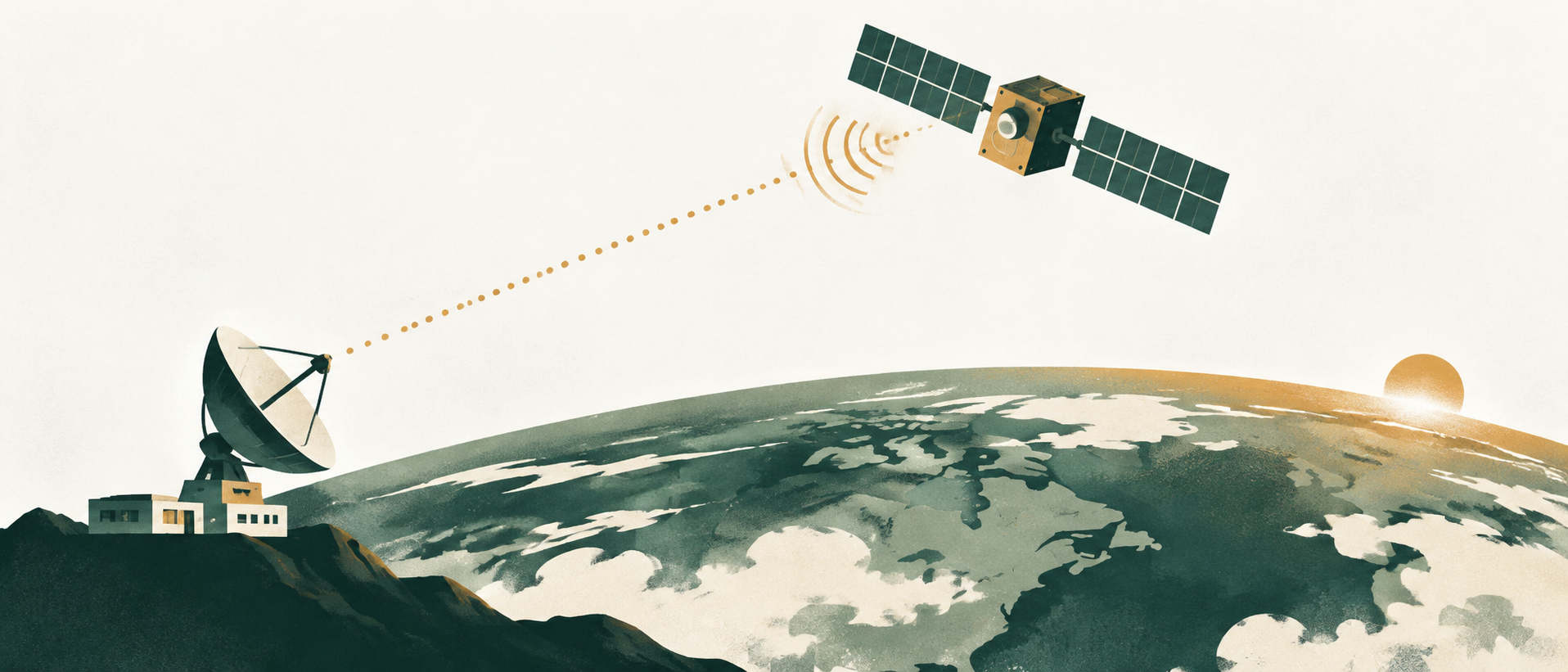
1An AI chip answered from space for the first time
Google launched a small prototype satellite on October 1 carrying its TPU, the custom chip it normally uses in data centers to run AI. This week the team sent a prompt up and got an answer back - a haiku from Google's open Gemma 4 model as it passed over Norway, the classic "Hello World" test for a new system.
In plain English
A TPU is Google's own AI chip - the same hardware that runs its data-center AI - and "the satellite answered a prompt" means the chip in orbit actually ran an AI model, not just relayed data to the ground.
Why it matters
Data centers on Earth consume huge amounts of electricity and water; space offers constant sunlight and no neighbors. This is still early: the satellite worked only in short sessions, next tests check whether the chips survive heat and radiation, and linked satellites are the 2027 goal.
2Websites get one switch to say “don't train on me”
OpenAI, Google, Microsoft, and Anthropic agreed to respect a single shared signal websites can place in robots.txt, the decades-old file that tells automated crawlers what they may read. Today opting out of AI training means setting rules for every company separately; the shared signal says it once for all of them.
In plain English
Instead of learning four different opt-out systems, a website can now say "no AI training" once, in one standard place, and every major lab's crawler is expected to honor it.
Why it matters
AI companies learn from huge amounts of web text, and many publishers say their work is taken without permission or payment. A single standard opt-out is a small but real shift of control back to site owners. It is voluntary, and rollouts are staggered: Anthropic already honors it, OpenAI says "coming months," Google and Microsoft say next year. Meta voiced support but hasn't committed to honoring it.
3China's Kling AI closed a ~$3 billion funding round
Kling, one of the leading text-to-video AI models, is built by Kuaishou, a Chinese short-video company. Its parent announced the round has fully closed: investors paid in about 19.8 billion yuan, roughly $3 billion US, and Kuaishou keeps about two-thirds ownership. Investors include Alibaba, Tencent, Baidu, and a state AI fund; Bloomberg reports Kling may pursue a listing as soon as 2027, unconfirmed by the company.
In plain English
A "closed" round means the money is actually in, not just pledged - investors have paid roughly $3 billion for a stake in China's leading AI video maker.
Why it matters
The video-AI race isn't just OpenAI's Sora and Google - China has heavily funded contenders, and investors are still writing very large checks months after Kling raised $2.8 billion. More competition usually means faster progress and lower prices.
4OpenAI tightened teen safety and promised public reports
OpenAI announced new protections for users under 18: ChatGPT will further limit practical information about weapons and security systems, get better at predicting when a user is a teen, and can automatically end chats fixated on violence. Repeated terminations can pause the account, with parent alerts planned for linked teen accounts. OpenAI also committed to a public Community Safety Report every six months, starting early 2027.
In plain English
ChatGPT will watch for signs a user might be under 18 and automatically apply stricter rules - and in extreme back-and-forths about violence, it can end the conversation itself.
Why it matters
AI chatbots face lawsuits and public pressure over harm to young users; scheduled reports and automatic interventions make safety an ongoing practice rather than an after-the-fact response. The limits roll out over coming weeks, so they are promises, not yet proven results.
OpenAI also published an update on detecting misaligned model behavior, but that was covered in the October 30 briefing, so it isn't repeated here.
All stories verified against original sources on the morning of October 31, 2026. Everything above is from October 30 announcements; rollout promises are not yet delivered features.